Tuesday, April 25, 2023

Lessons from Five Years of Bugs, Barrels, and Brewing

This July marks five years since I left my day job with the federal government to brew full-time. We filled our first barrel with mixed-fermentation saison before opening the tasting room at Sapwood Cellars. Since then, we are up to 80 oak barrels with a dedicated suite for mixed-fermentation. So, I thought it would be a good time to sit down and reflect on the lessons that Scott and I have learned over the years! The things we got right, the things we got wrong, and where we are going from here!

Luckily, we've had a pretty good run so far! We've cultivated a great group of supporters in our Wood Club. Neologism (gin-barrel-aged Cascade/Simcoe Cryo dry-hopped pale sour) was named one of Craft Beer & Brewing's Top-20 beers of 2022 by way of winning a massive blind tasting. Despite the pandemic we've been able to modestly expand (production, staff, and space)! We're even shipping beers around the US through Tavour!

I recently realized that Google discontinued Feedburner in 2021... which is why you haven't gotten an email from me in a while. I've changed The Mad Fermentationist over to a new email service, so if you've signed up you should get emails for new posts going forward! If you want more emails from me, I write the near-weekly Sapwood Newsletter (with details on new beers often including info on ingredients, process, and equipment)!


The Things We Got Right

Diverse Microflora - It is certainly simpler to have a single "house" culture. It allows for relatively worry-free blending, but doesn't leave as much room for unique flavors. Maintaining multiple cultures, we have to worry about the microbes from one barrel over-attenuating in the bottle if they are more attenuative than others in the blend. However, the variety of flavors expressed and the options for blending is worth the effort at our scale. We've been even happier since we started selecting our favorite barrels and using them to inoculate subsequent batches. Now we can select which character fits a pale sour vs. a sour red. 

Last week we blended our second batch of Growth Rings (three year blend). To ensure all the microbes have time to get to know each other, we blended the four barrels (all different pale base beers) into a tote. They'll sit there for a couple months to ensure the gravity is stable before priming and bottling. 


Balancing Planning and Creativity - We started 2023 with a rough timeline of the 20 or so barrel-aged mixed-ferm we'll release. However, when we fill barrels there generally isn't a specific plan for which barrel will be in which beer. Pale, wine-barrel-aged beer can be delightful on it's own, or serve as a great base of fruit, herbs, or dry hopping. When we taste them, we get to decide what will make the best possible beer. However, it's also nice to have unique bases/barrels earmarked for a particular purpose. Some examples of those include Opulence (sour red with dried sour cherries in the bourbon and red wine barrels), a Brett'd Belgian Tripel in Calvados (apple brandy), or Port barrels for There Are No Edges (Vin de Céréale).


Tracking Barrels - Using Google Sheets has worked out well for us. I can sort based on fill date, final gravity, base beer etc. It allows me to sit on my couch at home and look at what beers we have in need of fruit, blending, packaging etc. Barrels still fall through the cracks (nothing is more heartbreaking than tasting a barrel that is old/stale and seeing a note about how good it was six months ago). Sometimes a beer is delicious, it just doesn't fit into a blend.


Blending with Others - Whether it is our tasting room manager (Spencer), Lead Brewer (Ken), homebrewing friends, fellow brewers (e.g., the brewers from Other Half for a collab) etc. Tasting barrels with other people helps improve your palate, riff on ideas, and make more broadly appealing results. We all have flavor "blind spots" and it is a good idea to have other people looking too. It's fun to riff off other people's ideas and come up with flavor combinations that neither of you would have made on your own. 


Packaging - Our general approach to packaging has been a big success... once we started measuring the dissolved CO2 in the beer rather than relying on time/temperature/pressure. We blend barrels or transfer fruited beers to our blending tank and cold crash. The day before bottling we'll push in sugar (boiled in water) along with Premier Cuvee champagne yeast (rehydrated with a small amount of Start-Up/GoFerm nutrient). We then carbonate the beer to ~2 vol of CO2, with the sugar and yeast taking the beer the rest of the way. We fill on a bottler (XpressFill) that purges and counter-pressure fills. So far it's resulted in relatively quick/clean refermentations with reliable carbonation. 


The Things We Got Wrong

Not Allocating Time - It is easy to put-off barrel-aged beers for more pressing concerns. When there are DIPAs to dry hop, Pilsners to can, and excises taxes to exercise the sour beers are often pushed to the side. It's rare that a week or two of aging in one direction or another makes a dramatic difference... but it's hard to get the most out of a barrel program if it is always at the bottom of the priority list. We're getting better at it, but I still wish from the start I'd blocked off a specific time/day each week to taste barrels, trial blends, source ingredients, prop microbes etc. 


Over-Correcting - Initially we weren't getting enough acidity in some of our beers, so we started pulling levers... colder rinsing barrels, lower hopping rates etc. Then our beers started becoming too sour, so we started veering back in the other direction. Managing a barrel program is like driving a cruise ship, it is difficult to pivot quickly! It's difficult to step back and tell if there is something causing one specific batch from being too sour (or not sour enough) or if there is a systemic issue. 

I think we would have been well served to do a better mix starting early (some barrels cold or no-rise, more with just Brett etc.). This would have given us more options when it came to blending over- or under-soured beers. 
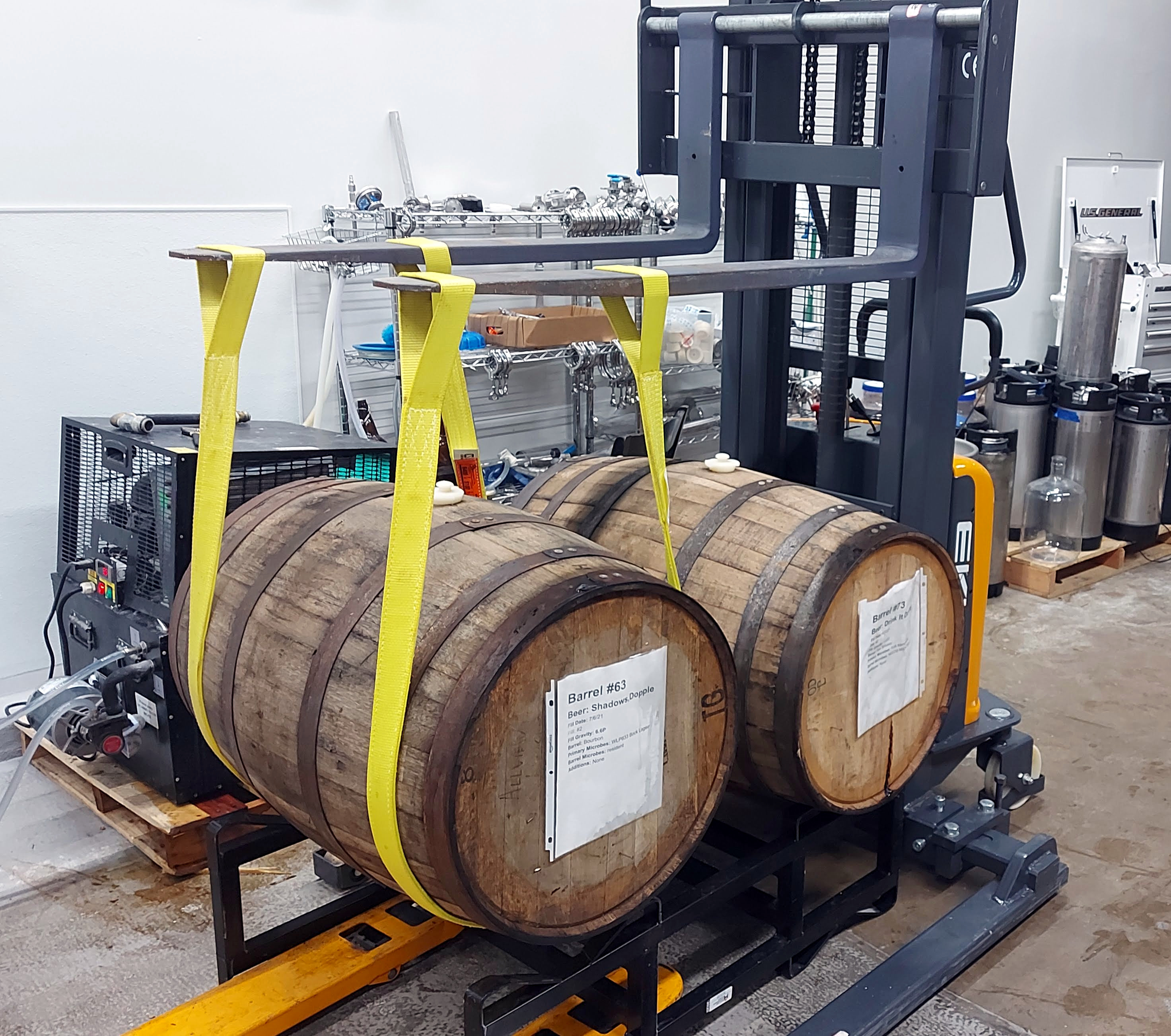


Appreciating the Impact of Fruit On Acidity - Early on to help out some of those under-acidified beers, we went onto fruit. I was surprised how little additional acidity they picked up from refermentation. Sure adding a really acidic fruit (e.g., black currants for Fellow Feeling) contributed acidity, but just refermenting on wine grapes or peaches did not. However, as our cultures "matured" we suddenly had beers dropping from a tart pH of 3.5 to an obnoxiously-acidic 3.0 after going onto the fruit (2.8 pH was the lowest I measured). That's despite pitching rehydrated wine yeast to ensure a healthy and quick refermentation. 

I thought maybe our resident lactic acid bacteria were becoming more hop tolerant, and the dilution of the beer with fruit was allowing them to kick into action. To test this we began adding a small amount of hop extract with the fruit (we use a 20% alpha extract from Hopsteiner). Our fruited beers stopped dropping pH nearly as much, and as an added benefit the head retention improved considerably. 


Hot Side Hopping - I didn't appreciate how much of the classic funky lambic/saison profile originates with the hops. While we've always used a "restrained" dose of aged hops at the start of the boil (~.5 lbs/bbl), that just wasn't enough to give the beers the aromatic depth I was looking for. Recently we've been experimenting with a similar size whirlpool addition of cold-stored hops. So far the results are promising! I should have noticed that many of my favorite homebrewed Brett Saisons had big whirlpool additions and/or dry hopping... but those were all relatively quick turn-around and not barrel-aged. I'm glad Scott and Ken pushed to age some of our pale ales (pre-dry hopping) in barrels, an idea I wasn't excited about... but the results have been really delicious!

Where We Are Headed

Barrel-aged sour beer seems to be a wide/shallow market at the moment. The people who love them are still searching them out, but the average beer drinker seems to have moved on to less "challenging" more "reliable" styles. It's hard to know how much the rapid expansion of the segment played into this loss of interest. I've heard of quite a few breweries down-sizing or eliminating barrel-aged sour beers... Luckily we still have 150 people in our Wood Club, which is a great way for us to get these beers into the hands of our biggest supporters and a base-level of sales for eight releases a year. We're aiming to make our mixed-ferm beers more "delicious" the sorts of beers that people want to drink a whole bottle of, not just drink an ounce or two at a share. 

However, as we've ramped up the mixed-ferm bottle release schedule (2019 - 8, 2020 -11, 2021 - 13, 2022 - 16, and hopefully ~20 in 2023) we occasionally have bottles to spare. Rather than distribute them locally, we've partnered with Tavour (which ships to many states).  They just released Homegrown Rule, a "Marylanbic" base with homegrown lemon verbena (from my yard) and pineapple sage (from Ken's garden). It's tart and snappy, with plenty of our house microbe character, augmented by the citrusy-green notes of the herbs. 


Monday, November 14, 2022

Best Hops According to Untappd

Our batch analysis/QC at Sapwood Cellars is pretty basic. Mostly it's me finding time each weekend to taste a recent release (ideally side-by-side a comparable example from another brewery). I write up tasting notes, include feedback I've gotten from other people, and recipe/process tweaks for next batch. 
Part of my routine is to scroll through Untappd to see if I can spot any common threads to the compliments or complaints... but I don't put a huge amount of stock in the average score (see this post).


Blind rating by a skilled tasting panel is the gold standard... but having a large/diverse group of beer drinkers give you feedback has value as well! With four years of Untappd scores for our IPAs at my disposal, I thought it would be interesting to see which hops "the beer drinking public" preferred in Sapwood Cellars IPAs and DIPAs!


Cheater Hops IPAs


We started this series of IPAs when we opened to showcase our favorite hop varieties. We recently released #22 (Citra-Motueka). All of the batches were 6.5-7.5% ABV, with similar malt bills (American pale barley, chit, wheat, and oats), fermented with an English-leaning yeast, and dry-hopped post-crash at 3-4 lbs/bbl. The table below is the average Untappd score of all batches dry hopped with the variety listed. 


HopAverage
Motueka4.221
Nelson4.190
Azacca4.188
Citra4.177
Riwaka4.169
Amarillo4.163
Simcoe4.162
Galaxy4.155
Mosaic4.144
Columbus4.129
Hydra4.122
Vic Secret4.122
Strata4.107


Seven of these varieties were only in one beer (Amarillo, Azacca, Columbus, Strata, Vic Secret, Hydra, Riwaka). So it is difficult to tease out if their score is a result of the hop or the context. See the table in the following section for a larger sample set. 


I wouldn't have guessed that Motueka would be the most popular compared to the likes of Nelson, Galaxy, Citra, Mosaic, and Simcoe! We've had hit-or-miss results with Motueka overall, with most of the hits coming from Freestyle Hops. We've gotten a few lots from other growers that have been too herbal/spicy without the bright lemon-lime note I enjoy. 


I really like Hydra as a "less risky" alternative to Galaxy. It has similar passionfruit-gum aromatics without the dried, peanut-shell notes I too often smell from Australian hops. The lone batch of Cheater Hops with Hydra (#18) also included Vic Secret and Galaxy. Leaning into that tropical flavor didn't provide enough complexity to me, and it didn't score particularly well. 


All IPAs and DIPAs


The table below include all 65 "big batch" IPAs and DIPAs we've released that don't contain adjuncts (although I did include Phantasm beers). These are diverse in terms of recipe construction, alcohol strength, and dry hopping rate. As a result, the scores are a bit more prone to bias compared to the Cheater Hops data set. 


HopAverage
Galaxy4.220
Hallertau Blanc4.220
Cashmere4.217
Nelson4.203
Motueka4.186
Mosaic4.186
Citra4.185
Simcoe4.178
Azacca4.157
Riwaka4.150
Amarillo4.141
Vic Secret4.131
Taiheke4.130
Columbus4.129
Strata4.113
Hydra4.096
Talus4.090
Sabro4.075
Lotus4.040
Idaho Gem4.010
Lemondrop4.010
Sultana3.990


Again some of the varieties near the top of the list are expected (Galaxy and Nelson), but who would guess Hallertau Blanc or Cashmere? The issue with this data set is that we don't brew beers randomly... every batch with Hallertau Blanc also included Nelson and/or Mosaic as part of our "Dragon" series of rye IPAs and DIPAs. Cashmere is mostly used in a specific base (Exaggerated Truth/Understated Lies) that is sweeter and extra-fruity thanks to a small percentage of hefeweizen yeast. We should probably try other hops in that base, and Cashmere in other bases to gauge the response!


Pairing Hops


For some batches you'd expect to see a high rating due to pairing two great hops together (e.g., Nelson/Galaxy or Mosaic/Citra). Both varieties score well across all our beers, so no surprise combing them results in a well-rated IPA. More interesting is sorting by the average standard deviation for the hops included. This shows which combinations rated higher than expected given the average scores for those hops across all beers. Snip Snap (Citra/Galaxy), Cheater Hops #22 (Citra/Motueka), Shard Blade (Mosaic/Galaxy), Cheater Hops #13 (Mosaic/Simcoe), and The Dragon (Nelson Sauvin/Mosaic/Hallertau Blanc) were all in the top-10 "overachievers." These hop blends follow different approaches either "leaning into" a particular flavor (fruity, or winey) or balancing fruity with a danker variety. 


Rounding out the top-10 are two all-Simcoe (Cheater Hops #12 and Drenched in Green), two all-Mosaic (Fundle Bundle and TDH Trial #1), and an all-Nelson beer (3S4MP). Certainly a sign that these hops can shine alone compared to Citra and Motueka which are highly rated in blends, but haven't exceled in single-hop beers (despite our best efforts). Of course you need a great lot of hops for this to work; the bottom-10 also includes single-hop beers featuring: Simcoe (Cheater Hops #9), Nelson Sauvin (Cheater Hops #11), and Mosaic (Fumble Bumble)! 


Two beers with Galaxy and Nelson (Cheater X and X2) each had a standard deviation close to 0. They still rate well, but no better or worse than expected across all beers with Nelson or Galaxy. 
Surprisingly three of the bottom four included three varieties Cheater Hops #7 (Simcoe, Citra, Mosaic) Cheater Hops #6 (Motueka, Mosaic, Simcoe) False Peak (Idaho 7, Sultana, Citra). Blending hops can create a generic "hoppiness." These beers may have been missing a distinct "wow" aroma for people to grab onto. 


Take Aways 

The high/low scores for different batches brewed with the same single hop variety really drives home how unreliable this data likely is. Without multiple batches hopped with the same hop combination, it is impossible to say with certainty if a beer scored well because of aromatic synergy or a delicious lot of hops. Luckily several of the top-rated combinations are beers we have brewed multiple times. 


The data does suggest to me that using one or two varieties for the dry hop is the best bet for making the most appealing IPA unless you have something very specific in mind. Often when breweries use a large number of hop varieties in a beer it is to promote consistency (batch-to-batch and year-to-year). It would be interesting to expand the data set to include beers from other breweries. That would produce data that is less specific to our particular brewing approach, hop sourcing, and customers' palates.


Help Provide Data

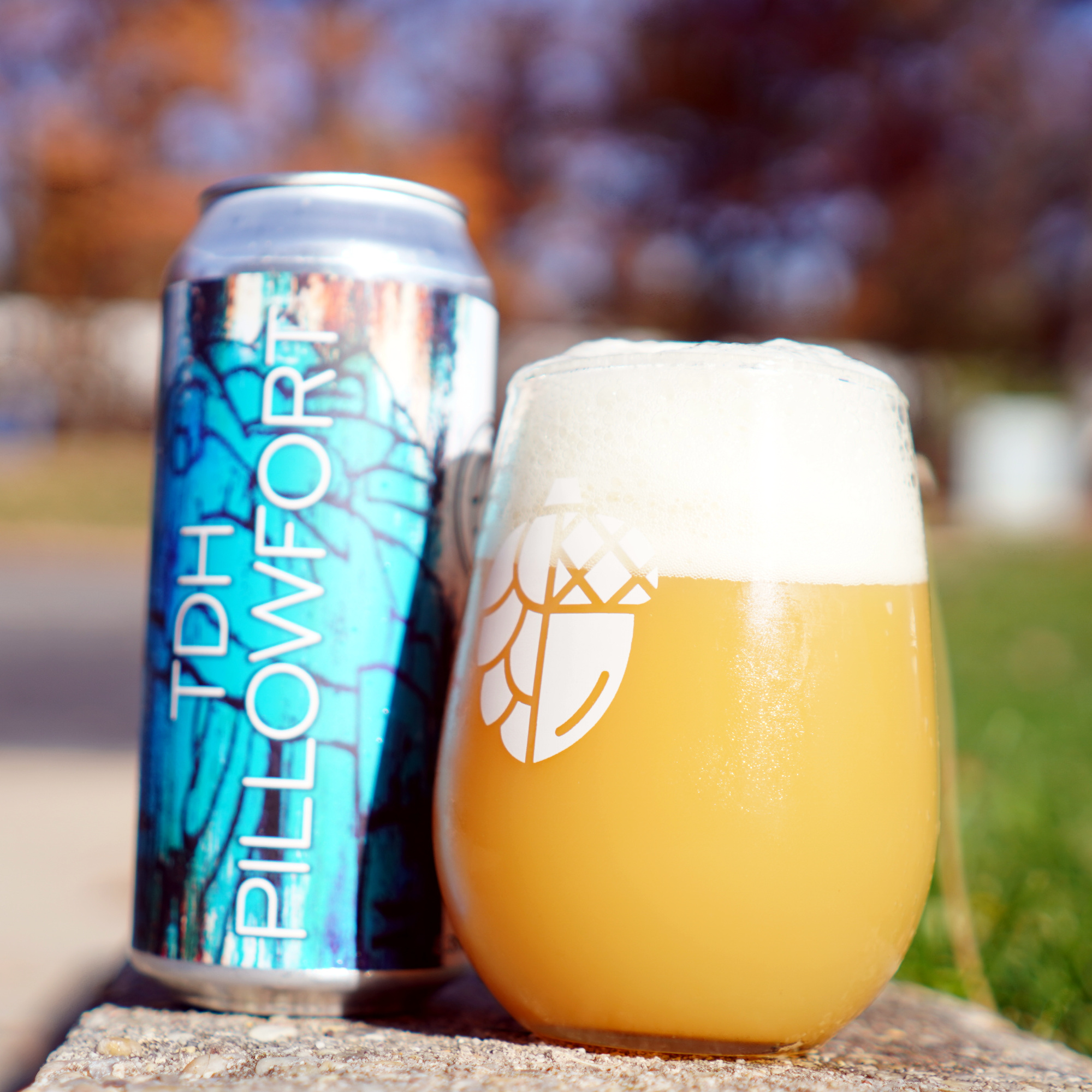
If you are interested in trying our beers for yourself... We've been direct-shipping Sapwood beers within Maryland for awhile, but if you live elsewhere in the US and are interested in trying our beers, we sent our first pallet (Cheater Hops #22 and TDH Pillowfort) to Tavour. They direct-ship to about half the states in the country. Here's the link for the app to notify you when they are available. 


Saturday, November 5, 2022

Small Craft Brewery Yeast Management

When it comes to brewing delicious beer, there are few aspects more important than the yeast. A healthy fermentation allows the malt, hops, and adjuncts to shine. Pitching the right amount of healthy cells helps ensure that the finished beer has the intended alcohol, expected residual sweetness, and appropriate yeast character.  


Over the last four years at Sapwood Cellars we've slowly improved our yeast handling. We've noticed improved fermentation consistency, and better tasting beers. Most of our process is excessive for a homebrewer, but it might give you some ideas!


Harvesting Yeast


We harvest yeast from moderate gravity beers when possible as these cells are less stressed and healthier as a result. Our general rhythm is to brew a pale ale with a fresh pitch, and harvest from that tank for an IPA and DIPA the following week. Once the pale ale fermentation is complete (repeated gravity readings, and no diacetyl or acetaldehyde sensory) we can and soft-crash to 56-58F (13-14C). Cold and dissolved CO2 encourage the yeast to settle out. Specific temperature and time are strain and tank dependent, but that works for most of the English-leaning strains we use (Boddington's, Conan, Whitbread, and the Thiolized-variants).


Once the beer has been cold for 24 hours, we attach a 1/2 bbl brink to the bottom of the tank and pasteurize through the line and brink with 180F (82C) water from our on-demand. 25 minutes hot ensures there aren't any stray microbes that will be passed onto the subsequent batches. After pushing out the water with CO2 pressure we spray the brink with cold water then pressurize it and the tank to ~10 PSI. 


We then dump about a gallon (4L) from the T until the yeast looks good (creamy, off-white) and then begin collecting into the brink. You don't need to dump a large volume of yeast. By keeping steady pressure on the tank and slowly releasing pressure on the brink through the valve at the top we ensure that the yeast won't come out of the cone too quickly (which could punch through pulling in more beer than yeast) and won't foam up in the brink. It takes 10-15 minutes to fill the brink. Usually we are able to collect 110-130 lbs (50-60 kg) before yeast starts coming out the top of the brink. 


We collect yeast before dry hopping to avoid having hops mixed in with the yeast. We also prefer the "less rough" flavor we achieve by dry hopping cold. If you dry hop early-mid fermentation and want to harvest, drop as much of the hops out as you can before crashing and harvesting.


Yeast Storage


Whenever possible we pitch within 72 hours of harvest. Larger yeast cultures generate more heat and thus tend to lose viability more rapidly. Store the yeast as cold as possible, which for us is ~36F (2C) in our walk-in. Ideally that would be closer to 32F (0C) to further slow its metabolism. Shake twice a day to dissipate hot-spots and vent down the pressure to knock-out CO2. If storing the yeast for more than a few days, attach a blow-off line to prevent pressure from building. 


There are studies about various additives for maintaining high yeast viability. We've added phosphate buffer to prevent a drastic pH drop. It's difficult to tell from a single data point, but viability dropped from 95% to 89% after a week of storage. We've seen closer to 10% reductions the handful of times we've stored yeast that long previously.  


We generally won't harvest and repitch beyond three generations (although recently we went to five). That's because with our limited number of tanks, variety of yeast strains, and canning schedule we'd eventually have to hold onto yeast for a couple of weeks before pitching or harvest from a strong beer. 


Determining Cell Count and Viability


There are plenty of successful brewers who pitch a standard weight by barrel/gravity, but knowing how many live cells you actually have is a great way to improve consistency. It's especially valuable if you use a variety of strains or want to bring in a new strain. Our harvests of the same strain can vary by as much as three times in terms of live cells per g of slurry (~.5-1.5 billion cells). The cost of all of the equipment required is ~$500, less than a single commercial 10 bbl yeast pitch from some labs. 


Start by shaking the brink to homogenize the culture. Then run a cup of yeast out, dump it (to avoid counting the cells packed around the port) and then pull a sample. The next step is to dilute the culture to a "workable" concentration - 1:100 for us. Too many cells packed together makes for a culture that is impossible/laborious to count, while too few raises the chances luck will throw-off the count. For a long time I diluted by volume, performing two sequential 10X dilutions with a micropipette. This had two drawbacks. First getting an accurate volume of yeast slurry is tricky because it is foamy and has small bits of trub that can plug-up the pipette. Second, we pitch by weight, so there was always some estimation when it came to converting the volume to a weight or the extra step of determining the physical density of the slurry by mixing with water in a graduated cylinder on a scale. What we do now is dilute by weight, which gives us cells per gram rather than cells per milliliter.


Our scale is accurate to .2 g, so weighing 1 g of yeast into 99 g of water has a ~20% margin of error. As a result I do 490 g of water with 5 g of the yeast slurry. This reduces the maximum margin of error to ~4%. After pouring the diluted culture back and forth to mix, I take 9.9 mL of the diluted culture with the micropipette and add .1 mL of a stock dye solution of Erythrosin B and phosphate buffer (1 g in 50mL of buffer). This results in a total dilution of 100X. You could go even further, a 10X dilution by weight (50 g yeast with 450 g of water) followed by a 10X dilution by volume (1 mL of the diluted culture with 8.9 mL water and .1 g of dye). Live cells are able to expel the Erythrosin B so they won't be stained, meaning any red yeast cells are dead. You can use a variety of other stains, but Erythrosin B is a food coloring and much safer to handle than methylene blue or trypan blue. Here's a post from Escarpmant Labs on using it inspired by my Tweet (which was in turn inspired by this).


Luckily the Boddingtons-type strain we use for most of our batches isn't "excessively" flocculent. When we fermented a run with Whitbread we ran into issues with the cells being too clumpy to count. Luckily BrewKaiser has a whole post on additions you can add to help. Phosphoric acid worked OK, but a local brewer suggested disodium EDTA, which I plan to buy before we do another run with a similar strain. 


Next, place a couple drops on the diluted culture a hemocytometer, apply the slide cover, and stick it under a microscope (we have an Omax). Count the live and dead cells in five squares (each made up of 25 small squares) - four corners, and center. This provides a large enough sample size to avoid undue randomness. A small tally counter helps keep track. The standard rule is to count cells touching the left and top lines, but not the right or bottom. Count connected cells as two only if the daughter cell is more than half the size of the mother. Then I plug the totals into Inland Island's Yeast Cell Count Calculator. Usually our harvests are 80-90% viable off a fresh pitch, and they tend to go up from there on subsequent generations (90-95%). If your viability isn't great it could either be that the yeast isn't getting enough nutrients/oxygen, your initial pitching rate was too high or low, or that you are waiting too long to harvest.  


There are automated solutions for yeast counting, but with some practice the whole processes will take less than 10 minutes.  


Pitching Yeast


To pitch, we attach the brink to a T inline during knock-out. With the brink on a scale we use CO2 to slowly push in the desired weight of yeast (calculated based on the cell count, wort gravity, and volume). We pitch during knock-out so the yeast mixes with the aerated wort as it goes into the fermentor. White Labs advocates using a pump to pitch their fresh yeast inline to achieve better mixing with the wort. Best practice is to do another cell count off the tank once knock-out is complete to validate your process (we did it a few times, but now trust our approach).


When we started brewing more double batches to fill our 20 bbl tanks, we were pitching enough cells for 20 bbls along with the first 10 bbls of wort. Our thought process was that the yeast wouldn't do much in the 3-4 hours before the second half of the wort went in. However, we found our fermentations were less reliable, often dragging towards terminal gravity, and the yeast from those batches had much lower viability than expected. Both of these issues improved significantly once we switched to pitching only enough cells for the initial knock-out volume. This allows for more growth and thus a higher proportion of younger yeast cells. 


Hopefully this overview of our process is helpful for someone starting a new craft brewery, or looking to take their yeast management to the next level. As with anything in brewing, the more variables you can track and control the more consistency you'll have in your results. Yeast management isn't a "fun" topic, but it is one of the simplest things a brewery can do to increase consistency, improve flavor, and save money!


Wednesday, May 20, 2020

Historic English Imperial Stout Revisted

Any long-time readers may recall my interest in the original Russian Imperial Stouts – brewed in England with four malts (pale, amber, brown, and black) plus caramelized sugar. Fermented with English ale yeast and Brettanomyces. They bear about as much resemblance to modern pastry stouts as the original English-brewed IPAs do to today’s hazies and milkshakes.

Of the many recipes from this blog that we’ve adapted to the big system at Sapwood Cellars (Atomic Apricot, Cherry Wine, TmavĂ© Pivo, Scottish Stout, Cheater Hops, Saphir Pilsner, Berliner etc.) my Courage RIS-Inspired is probably the one I was most excited about! We closely followed the original recipe from 2007 (which I preferred to the 2016 rebrew). Last summer we released the base beer (Lord Rupert Everton), followed last fall by Lord Rupert Barrelton which had a quick dip in barrels that held Cognac Finish Rye Whiskey from Sagamore Spirits.

After refilling the barrels from kegs of the same base beer, we pitched the same strain of Brett I used for the original, WY5110 Wyeast Brett anomalus. It's been out of production since 2007, but I asked everyone I could think of (starting with Wyeast) and no one had the strain available… French microbiologist Christophe Pinchon to the rescue! We’d already gotten “his” Willner Brett strain second hand for our gose (Salzig). The culture he sent started up quickly and I pitched half of an active 2L starter into each 80 gallon barrel in September… then not much happened. The Brett didn’t produce any CO2 or reduce the gravity over six months. Originally, we planned to bottle the beer once it stabilized, but without any apparent fermentation we decided we were better off kegging the beer as Sir Rupert Barrelton.


Sir Rupert Barrelton

Smell – Loamy, with fresher notes of Tootsie Roll (from the malt) and coconut/vanilla (from the barrel). I really have a hard time figuring out it that earthy note is Brett, or just mild oxidation from time warm in the barrels. The spirit-character is relatively subtle, but is enough to immediately make it clear this isn’t an authentic take.

Appearance – Black with chestnut edges. Pretty good dark brown head. Solid retention.

Taste – Smooth flavor without any sharpness from the roast. The Maris Otter and Amber malt help to fill-in the background of the black malt. Plenty of baking soda prevents the roast-acidity that can cause stouts to become acrid. The dark candi syrup brings a subtle dark fruitiness without being obnoxiously raisin/plum like dark crystal can be.

Mouthfeel – Not as thick as stout drinkers are used to (I’ve seen some stouts finish above 1.080 now… and I used to think Dark Lord’s 1.060+ was absurd)! Low carb, just how I like by big/dark beers.

Drinkability & Notes – It’s a unique beer compared to the other more “modern” stouts we brew. The “reasonable” FG of 1.026 makes it easier to drink than the typically sweeter ones. I like the depth of the combination of barrel-character and malt. The age/Brett give it additional complexity. If you are in Maryland and want to try the beer we'll have it available in crowlers the next month or so.

Changes for Next Time – Maybe it was the alcoholic boost from the barrel that prevented the Brett from doing more? Better to use more neutral barrels, or stainless with oak barrel-alternatives. We refilled the barrels with a riff on my Big Funky Ale and pitched additional microbes. It would be fun to try making our own invert no.4 to replace the dark candi syrup.


Courage RIS Inspired 2016

Smell – Brett (cherry, funk, dusty). The Brett C really covers up the malt almost completely in the nose. Blind I suspect I’d lean towards calling it an Oud Bruin.

Appearance – Black with dark-brown edges. Big tan head that is held up by the carbonation for a few minutes before deflating.

Taste – Stout-ier than the nose, with some cocoa notes. However, the Brett is still the primary flavor. Some nutty (almost peanut brittle) flavors from the malts. Moderate bitterness.

Mouthfeel – Carb is similar to what I remember, higher than I’d prefer. A little thin, although once the carbonation is swirled-down it improves.

Drinkability & Notes – It’s a bit beer with a lot of funk, plenty of alcohol, and a bit too much carbonation, not exactly a beer I (or many) would drink quickly.


Courage RIS Inspired 2007

Smell – Oaky. Unlike Sir Rupert, it is the wood rather than spirit coming through. Not damp basement, and not Home Depot lumber aisle either. Just a pleasant vanilla-sugar cookie woodiness. A hint of licorice. The roasty-toasty malt is there, but is subtle. Like Sir Rupert the Brett is restrained, honestly makes me more confident that the Brett really did do “something” in the fresher beer.

Appearance – Black with chestnut highlights. Head pours small and drops quickly.

Taste – Every bit as good as it was 10 years ago. Cookie-toasty, vanilla-oaky, cocoa-roasty, and leather-earthy. It is relatively dry for a beer this big, but the bitterness is mostly gone too. I don’t get any wet paper, or any other signs of detrimental oxidation.

Mouthfeel – The body a bit thin, but considering I brewed it when I was 24 and I’m 37 now I can’t complain! A testament to my beginner's luck… and metabisulfite. Carbonation is low, but I wouldn’t mind if it was even lower.

Drinkability & Notes – What can I say about a beer I brewed more than 1/3 of my life ago? The other two are good beers that I enjoy, this one is something special. A huge range of flavors that all work in unison. Sadly this is my last bottle.


Tuesday, February 18, 2020

Why Are Brewing and Winemaking so Different?

On their surfaces the fermentations of beer and wine seem like they should be similar. A cool, sugary liquid is inoculated with Saccharomyces cerevisiae (or a close relative) and the eventual product is packaged with a goal of minimizing oxidation. Why then are the two approached in such fundamentally different ways from yeast pitching rate to the use of oxygen scavengers?

I’ve only made a handful on wine kits over the years so I’m by no means an expert vintner. That said, I’ve been thinking about cider while I wait for TTB-approval to begin production at Sapwood Cellars. The question is, do we approach it like a beer or a wine?

Wine yeast for a Flemish Red

Wine yeast has a different history than beer yeast. Where ale and lager strains have been domesticated for centuries, most wine strains were at best semi-domesticated until the last few decades. A big reason for that is the seasonal production differences between the two products. Dried grain and hops store and ship easily compared to grapes, so harvesting and repitching yeast was common in beer long before wine (which relied on an annual spontaneous fermentation).

Wine strains are still less domesticated (more wild) and thus tend to be more “competitive” than beer yeast, producing kill factors and generally being able to bootstrap up from low cell counts. As a result, suggested pitching rates for wine are usually much lower than for beer. A typical pitching rate for a 1.080 beer might be 3 grams of dried yeast per gallon, where wine is usually 1 g per gallon. This is also reflected in the package size for the strains (5 g vs. 11.5 g).

For home winemakers anyway, it is difficult to find best-practices for things like pitching rate and oxygenation. We can certainly debate the credibility and accuracy of the advice, but homebrewers have widely referenced formulas and targets for these based on original gravity and type of yeast (ale vs. lager).

Riesling Fermentation

Wine must isn't boiled to avoid destroying its fresh fruit flavor, so without chemical intervention there is no “clean slate” to begin fermentation. Even pitching a pure culture of yeast wouldn’t guarantee a product that doesn't eventually sour or go off. That helps to explain the common uses of antimicrobial sulfite and sorbate (which winemakers have widely referenced formulas for dosing rate). Chemical stabilization also allows the packaging of sweet wines, where brewers have mash temperature to control fermentability.

Most of the analysis of wine, must, and fermentation has happened since the 1970s. Where some of the earliest work on microbiology (not to mention scientific measurement) was from breweries a century earlier. Beer became science-ified first thanks to the earlier industrialization of brewing (again a result of the differences in ingredients). 

Saison Fermentation

Modern breweries are built upon keeping oxygen out of the beer post-fermentation. Much of this is accomplished with purging with carbon dioxide or nitrogen and transfers and packaging under pressure. Conversely, conventional wine production relies on dosing with metabisulfite (a potent oxygen scavenger) to neutralize oxidation while the process doesn’t do as much to avoid it.

Part of this is that breweries may make 25 or more batches of beer in a given fermenter each year, while seasonal wineries don’t have this luxury. This means even smaller breweries can afford to spend more on their equipment allowing for transfers under pressure rather than pumps. Dealing with force-carbonation makes pressure vessels a requirement. There are also stages of winemaking, like punch-downs or separating the skins from the fermented wine, that are nearly impossible to do without introducing some oxygen. There is also an expectation of stability and ageability with wine.

Traditionally beer was naturally carbonated, which allows the yeast to scavenge oxygen introduced during packaging. Combine that with typical quick consumption and oxidation wasn't as large of a concern until recently.

Natural wineries that avoid the addition of sulfites do take some cues from brewing in limiting oxygen, but this is currently a growing but still niche winemaking approach.

Chemical additions for a white wine kit

Beer has always been a recipe: grains, water, and herbs at a minimum. Sugars, fruit, spices etc. all have a historic precedent in brewing. It is no big surprise then that brewers are more likely to add 100 different ingredients than vintners who can make wine from crushed grapes alone - although adulteration had a historic place. Most of the wines I see with a "flavor" addition (e.g., chocolate, almond etc.) are inexpensive gimmicks. The lone exception is herbs in wines like vermouth. Where most of the expensive highly sought-after beers contain additions that fall outside of the core ingredients.

Modern wineries add all sorts of processing aids, acid/sugar adjustments, nutrients etc. but generally with the goal of balancing, showcasing, or heightening the fruit expression. Wine strains are now carefully selected to have specific interactions to increase aromatic compounds (e.g., the ability to converts the thiol 3MH to 3MHA). Wine yeast blends are also popular with one strain freeing a compound and another converting it. All things that are rarely considered for brewing.

Brewers have only relatively recently begun to embrace aging in oak barrels, something many wineries never gave up on when stainless steel became the standard. Brewers have very much relied on the secondhand barrels from wine and spirit production rather than buying new or directly supporting coopers.

This goes after the larger point that brewers are currently less tethered to their industry's recent past than wineries. The most popular craft beers of today don't look or smell like any beers that were produced 30 years ago, while wines have remained relatively unchanged. Much of the American craft beer boom was based on taking dead or dying styles, ingredients, and techniques and resurrecting them. It is great to see the same becoming more popular in wine with the resurgence of orange wine, obscure varietals, and natural winemaking.

Barrels for aging

I’m not here to argue that either brewers or vintners are better. I think there are things that each side could learn from the other. Why don’t we see dry hopped wine? Why don’t brewers add 5 PPM of metabisulfite as insurance for the hazy IPAs? Why don’t we see more wineries reduce their sulfite usage by purging their tanks and bottles? Why don’t we see more brewers celebrate the terroir of local ingredients? I even wrote an article for BYO about using wine yeast in beer.

Someone could likely write a similar article about distilleries, cideries, sake-producers, etc. The point is to get out of your box, and see what other experts suggest in their chosen domain. Determine if any of it is useful to what you do!

I've talked to cidermakers who operate just like a winery in terms of their fermentation and highlighting of the apples, while others are clearly more influenced by craft beer (take Graft). We'll likely take a hybrid approach for our ciders, using our best low-oxygen transfers along with winemaking techniques that make sense to us. Celebrating the character of the apples, but still sometimes having fun with additional flavors.