Showing posts with label Sapwood Cellars. Show all posts

Tuesday, April 25, 2023

Lessons from Five Years of Bugs, Barrels, and Brewing

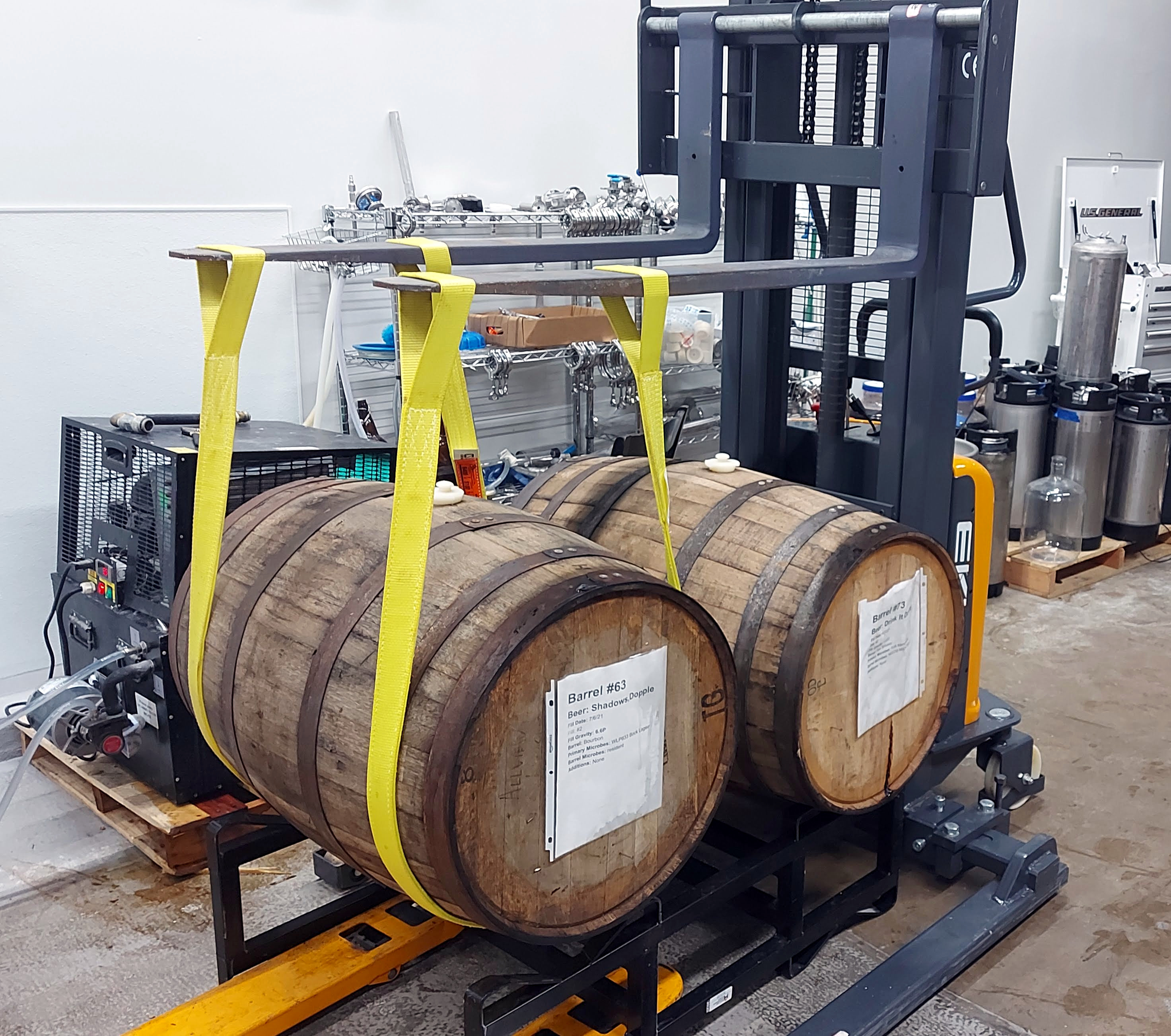
This July marks five years since I left my day job with the federal government to brew full-time. We filled our first barrel with mixed-fermentation saison before opening the tasting room at Sapwood Cellars. Since then, we are up to 80 oak barrels with a dedicated suite for mixed-fermentation. So, I thought it would be a good time to sit down and reflect on the lessons that Scott and I have learned over the years! The things we got right, the things we got wrong, and where we are going from here!

Luckily, we've had a pretty good run so far! We've cultivated a great group of supporters in our Wood Club. Neologism (gin-barrel-aged Cascade/Simcoe Cryo dry-hopped pale sour) was named one of Craft Beer & Brewing's Top-20 beers of 2022 by way of winning a massive blind tasting. Despite the pandemic we've been able to modestly expand (production, staff, and space)! We're even shipping beers around the US through Tavour!

I recently realized that Google discontinued Feedburner in 2021... which is why you haven't gotten an email from me in a while. I've changed The Mad Fermentationist over to a new email service, so if you've signed up you should get emails for new posts going forward! If you want more emails from me, I write the near-weekly Sapwood Newsletter (with details on new beers often including info on ingredients, process, and equipment)!


The Things We Got Right

Diverse Microflora - It is certainly simpler to have a single "house" culture. It allows for relatively worry-free blending, but doesn't leave as much room for unique flavors. Maintaining multiple cultures, we have to worry about the microbes from one barrel over-attenuating in the bottle if they are more attenuative than others in the blend. However, the variety of flavors expressed and the options for blending is worth the effort at our scale. We've been even happier since we started selecting our favorite barrels and using them to inoculate subsequent batches. Now we can select which character fits a pale sour vs. a sour red. 

Last week we blended our second batch of Growth Rings (three year blend). To ensure all the microbes have time to get to know each other, we blended the four barrels (all different pale base beers) into a tote. They'll sit there for a couple months to ensure the gravity is stable before priming and bottling. 


Balancing Planning and Creativity - We started 2023 with a rough timeline of the 20 or so barrel-aged mixed-ferm we'll release. However, when we fill barrels there generally isn't a specific plan for which barrel will be in which beer. Pale, wine-barrel-aged beer can be delightful on it's own, or serve as a great base of fruit, herbs, or dry hopping. When we taste them, we get to decide what will make the best possible beer. However, it's also nice to have unique bases/barrels earmarked for a particular purpose. Some examples of those include Opulence (sour red with dried sour cherries in the bourbon and red wine barrels), a Brett'd Belgian Tripel in Calvados (apple brandy), or Port barrels for There Are No Edges (Vin de Céréale).


Tracking Barrels - Using Google Sheets has worked out well for us. I can sort based on fill date, final gravity, base beer etc. It allows me to sit on my couch at home and look at what beers we have in need of fruit, blending, packaging etc. Barrels still fall through the cracks (nothing is more heartbreaking than tasting a barrel that is old/stale and seeing a note about how good it was six months ago). Sometimes a beer is delicious, it just doesn't fit into a blend.


Blending with Others - Whether it is our tasting room manager (Spencer), Lead Brewer (Ken), homebrewing friends, fellow brewers (e.g., the brewers from Other Half for a collab) etc. Tasting barrels with other people helps improve your palate, riff on ideas, and make more broadly appealing results. We all have flavor "blind spots" and it is a good idea to have other people looking too. It's fun to riff off other people's ideas and come up with flavor combinations that neither of you would have made on your own. 


Packaging - Our general approach to packaging has been a big success... once we started measuring the dissolved CO2 in the beer rather than relying on time/temperature/pressure. We blend barrels or transfer fruited beers to our blending tank and cold crash. The day before bottling we'll push in sugar (boiled in water) along with Premier Cuvee champagne yeast (rehydrated with a small amount of Start-Up/GoFerm nutrient). We then carbonate the beer to ~2 vol of CO2, with the sugar and yeast taking the beer the rest of the way. We fill on a bottler (XpressFill) that purges and counter-pressure fills. So far it's resulted in relatively quick/clean refermentations with reliable carbonation. 


The Things We Got Wrong

Not Allocating Time - It is easy to put-off barrel-aged beers for more pressing concerns. When there are DIPAs to dry hop, Pilsners to can, and excises taxes to exercise the sour beers are often pushed to the side. It's rare that a week or two of aging in one direction or another makes a dramatic difference... but it's hard to get the most out of a barrel program if it is always at the bottom of the priority list. We're getting better at it, but I still wish from the start I'd blocked off a specific time/day each week to taste barrels, trial blends, source ingredients, prop microbes etc. 


Over-Correcting - Initially we weren't getting enough acidity in some of our beers, so we started pulling levers... colder rinsing barrels, lower hopping rates etc. Then our beers started becoming too sour, so we started veering back in the other direction. Managing a barrel program is like driving a cruise ship, it is difficult to pivot quickly! It's difficult to step back and tell if there is something causing one specific batch from being too sour (or not sour enough) or if there is a systemic issue. 

I think we would have been well served to do a better mix starting early (some barrels cold or no-rise, more with just Brett etc.). This would have given us more options when it came to blending over- or under-soured beers. 


Appreciating the Impact of Fruit On Acidity - Early on to help out some of those under-acidified beers, we went onto fruit. I was surprised how little additional acidity they picked up from refermentation. Sure adding a really acidic fruit (e.g., black currants for Fellow Feeling) contributed acidity, but just refermenting on wine grapes or peaches did not. However, as our cultures "matured" we suddenly had beers dropping from a tart pH of 3.5 to an obnoxiously-acidic 3.0 after going onto the fruit (2.8 pH was the lowest I measured). That's despite pitching rehydrated wine yeast to ensure a healthy and quick refermentation. 

I thought maybe our resident lactic acid bacteria were becoming more hop tolerant, and the dilution of the beer with fruit was allowing them to kick into action. To test this we began adding a small amount of hop extract with the fruit (we use a 20% alpha extract from Hopsteiner). Our fruited beers stopped dropping pH nearly as much, and as an added benefit the head retention improved considerably. 


Hot Side Hopping - I didn't appreciate how much of the classic funky lambic/saison profile originates with the hops. While we've always used a "restrained" dose of aged hops at the start of the boil (~.5 lbs/bbl), that just wasn't enough to give the beers the aromatic depth I was looking for. Recently we've been experimenting with a similar size whirlpool addition of cold-stored hops. So far the results are promising! I should have noticed that many of my favorite homebrewed Brett Saisons had big whirlpool additions and/or dry hopping... but those were all relatively quick turn-around and not barrel-aged. I'm glad Scott and Ken pushed to age some of our pale ales (pre-dry hopping) in barrels, an idea I wasn't excited about... but the results have been really delicious!

Where We Are Headed

Barrel-aged sour beer seems to be a wide/shallow market at the moment. The people who love them are still searching them out, but the average beer drinker seems to have moved on to less "challenging" more "reliable" styles. It's hard to know how much the rapid expansion of the segment played into this loss of interest. I've heard of quite a few breweries down-sizing or eliminating barrel-aged sour beers... Luckily we still have 150 people in our Wood Club, which is a great way for us to get these beers into the hands of our biggest supporters and a base-level of sales for eight releases a year. We're aiming to make our mixed-ferm beers more "delicious" the sorts of beers that people want to drink a whole bottle of, not just drink an ounce or two at a share. 

However, as we've ramped up the mixed-ferm bottle release schedule (2019 - 8, 2020 -11, 2021 - 13, 2022 - 16, and hopefully ~20 in 2023) we occasionally have bottles to spare. Rather than distribute them locally, we've partnered with Tavour (which ships to many states).  They just released Homegrown Rule, a "Marylanbic" base with homegrown lemon verbena (from my yard) and pineapple sage (from Ken's garden). It's tart and snappy, with plenty of our house microbe character, augmented by the citrusy-green notes of the herbs. 


Saturday, November 5, 2022

Small Craft Brewery Yeast Management

When it comes to brewing delicious beer, there are few aspects more important than the yeast. A healthy fermentation allows the malt, hops, and adjuncts to shine. Pitching the right amount of healthy cells helps ensure that the finished beer has the intended alcohol, expected residual sweetness, and appropriate yeast character.  


Over the last four years at Sapwood Cellars we've slowly improved our yeast handling. We've noticed improved fermentation consistency, and better tasting beers. Most of our process is excessive for a homebrewer, but it might give you some ideas!


Harvesting Yeast


We harvest yeast from moderate gravity beers when possible as these cells are less stressed and healthier as a result. Our general rhythm is to brew a pale ale with a fresh pitch, and harvest from that tank for an IPA and DIPA the following week. Once the pale ale fermentation is complete (repeated gravity readings, and no diacetyl or acetaldehyde sensory) we can and soft-crash to 56-58F (13-14C). Cold and dissolved CO2 encourage the yeast to settle out. Specific temperature and time are strain and tank dependent, but that works for most of the English-leaning strains we use (Boddington's, Conan, Whitbread, and the Thiolized-variants).


Once the beer has been cold for 24 hours, we attach a 1/2 bbl brink to the bottom of the tank and pasteurize through the line and brink with 180F (82C) water from our on-demand. 25 minutes hot ensures there aren't any stray microbes that will be passed onto the subsequent batches. After pushing out the water with CO2 pressure we spray the brink with cold water then pressurize it and the tank to ~10 PSI. 


We then dump about a gallon (4L) from the T until the yeast looks good (creamy, off-white) and then begin collecting into the brink. You don't need to dump a large volume of yeast. By keeping steady pressure on the tank and slowly releasing pressure on the brink through the valve at the top we ensure that the yeast won't come out of the cone too quickly (which could punch through pulling in more beer than yeast) and won't foam up in the brink. It takes 10-15 minutes to fill the brink. Usually we are able to collect 110-130 lbs (50-60 kg) before yeast starts coming out the top of the brink. 


We collect yeast before dry hopping to avoid having hops mixed in with the yeast. We also prefer the "less rough" flavor we achieve by dry hopping cold. If you dry hop early-mid fermentation and want to harvest, drop as much of the hops out as you can before crashing and harvesting.


Yeast Storage


Whenever possible we pitch within 72 hours of harvest. Larger yeast cultures generate more heat and thus tend to lose viability more rapidly. Store the yeast as cold as possible, which for us is ~36F (2C) in our walk-in. Ideally that would be closer to 32F (0C) to further slow its metabolism. Shake twice a day to dissipate hot-spots and vent down the pressure to knock-out CO2. If storing the yeast for more than a few days, attach a blow-off line to prevent pressure from building. 


There are studies about various additives for maintaining high yeast viability. We've added phosphate buffer to prevent a drastic pH drop. It's difficult to tell from a single data point, but viability dropped from 95% to 89% after a week of storage. We've seen closer to 10% reductions the handful of times we've stored yeast that long previously.  


We generally won't harvest and repitch beyond three generations (although recently we went to five). That's because with our limited number of tanks, variety of yeast strains, and canning schedule we'd eventually have to hold onto yeast for a couple of weeks before pitching or harvest from a strong beer. 


Determining Cell Count and Viability


There are plenty of successful brewers who pitch a standard weight by barrel/gravity, but knowing how many live cells you actually have is a great way to improve consistency. It's especially valuable if you use a variety of strains or want to bring in a new strain. Our harvests of the same strain can vary by as much as three times in terms of live cells per g of slurry (~.5-1.5 billion cells). The cost of all of the equipment required is ~$500, less than a single commercial 10 bbl yeast pitch from some labs. 


Start by shaking the brink to homogenize the culture. Then run a cup of yeast out, dump it (to avoid counting the cells packed around the port) and then pull a sample. The next step is to dilute the culture to a "workable" concentration - 1:100 for us. Too many cells packed together makes for a culture that is impossible/laborious to count, while too few raises the chances luck will throw-off the count. For a long time I diluted by volume, performing two sequential 10X dilutions with a micropipette. This had two drawbacks. First getting an accurate volume of yeast slurry is tricky because it is foamy and has small bits of trub that can plug-up the pipette. Second, we pitch by weight, so there was always some estimation when it came to converting the volume to a weight or the extra step of determining the physical density of the slurry by mixing with water in a graduated cylinder on a scale. What we do now is dilute by weight, which gives us cells per gram rather than cells per milliliter.


Our scale is accurate to .2 g, so weighing 1 g of yeast into 99 g of water has a ~20% margin of error. As a result I do 490 g of water with 5 g of the yeast slurry. This reduces the maximum margin of error to ~4%. After pouring the diluted culture back and forth to mix, I take 9.9 mL of the diluted culture with the micropipette and add .1 mL of a stock dye solution of Erythrosin B and phosphate buffer (1 g in 50mL of buffer). This results in a total dilution of 100X. You could go even further, a 10X dilution by weight (50 g yeast with 450 g of water) followed by a 10X dilution by volume (1 mL of the diluted culture with 8.9 mL water and .1 g of dye). Live cells are able to expel the Erythrosin B so they won't be stained, meaning any red yeast cells are dead. You can use a variety of other stains, but Erythrosin B is a food coloring and much safer to handle than methylene blue or trypan blue. Here's a post from Escarpmant Labs on using it inspired by my Tweet (which was in turn inspired by this).


Luckily the Boddingtons-type strain we use for most of our batches isn't "excessively" flocculent. When we fermented a run with Whitbread we ran into issues with the cells being too clumpy to count. Luckily BrewKaiser has a whole post on additions you can add to help. Phosphoric acid worked OK, but a local brewer suggested disodium EDTA, which I plan to buy before we do another run with a similar strain. 


Next, place a couple drops on the diluted culture a hemocytometer, apply the slide cover, and stick it under a microscope (we have an Omax). Count the live and dead cells in five squares (each made up of 25 small squares) - four corners, and center. This provides a large enough sample size to avoid undue randomness. A small tally counter helps keep track. The standard rule is to count cells touching the left and top lines, but not the right or bottom. Count connected cells as two only if the daughter cell is more than half the size of the mother. Then I plug the totals into Inland Island's Yeast Cell Count Calculator. Usually our harvests are 80-90% viable off a fresh pitch, and they tend to go up from there on subsequent generations (90-95%). If your viability isn't great it could either be that the yeast isn't getting enough nutrients/oxygen, your initial pitching rate was too high or low, or that you are waiting too long to harvest.  


There are automated solutions for yeast counting, but with some practice the whole processes will take less than 10 minutes.  


Pitching Yeast


To pitch, we attach the brink to a T inline during knock-out. With the brink on a scale we use CO2 to slowly push in the desired weight of yeast (calculated based on the cell count, wort gravity, and volume). We pitch during knock-out so the yeast mixes with the aerated wort as it goes into the fermentor. White Labs advocates using a pump to pitch their fresh yeast inline to achieve better mixing with the wort. Best practice is to do another cell count off the tank once knock-out is complete to validate your process (we did it a few times, but now trust our approach).


When we started brewing more double batches to fill our 20 bbl tanks, we were pitching enough cells for 20 bbls along with the first 10 bbls of wort. Our thought process was that the yeast wouldn't do much in the 3-4 hours before the second half of the wort went in. However, we found our fermentations were less reliable, often dragging towards terminal gravity, and the yeast from those batches had much lower viability than expected. Both of these issues improved significantly once we switched to pitching only enough cells for the initial knock-out volume. This allows for more growth and thus a higher proportion of younger yeast cells. 


Hopefully this overview of our process is helpful for someone starting a new craft brewery, or looking to take their yeast management to the next level. As with anything in brewing, the more variables you can track and control the more consistency you'll have in your results. Yeast management isn't a "fun" topic, but it is one of the simplest things a brewery can do to increase consistency, improve flavor, and save money!


Wednesday, May 20, 2020

Historic English Imperial Stout Revisted

Any long-time readers may recall my interest in the original Russian Imperial Stouts – brewed in England with four malts (pale, amber, brown, and black) plus caramelized sugar. Fermented with English ale yeast and Brettanomyces. They bear about as much resemblance to modern pastry stouts as the original English-brewed IPAs do to today’s hazies and milkshakes.

Of the many recipes from this blog that we’ve adapted to the big system at Sapwood Cellars (Atomic Apricot, Cherry Wine, Tmavé Pivo, Scottish Stout, Cheater Hops, Saphir Pilsner, Berliner etc.) my Courage RIS-Inspired is probably the one I was most excited about! We closely followed the original recipe from 2007 (which I preferred to the 2016 rebrew). Last summer we released the base beer (Lord Rupert Everton), followed last fall by Lord Rupert Barrelton which had a quick dip in barrels that held Cognac Finish Rye Whiskey from Sagamore Spirits.

After refilling the barrels from kegs of the same base beer, we pitched the same strain of Brett I used for the original, WY5110 Wyeast Brett anomalus. It's been out of production since 2007, but I asked everyone I could think of (starting with Wyeast) and no one had the strain available… French microbiologist Christophe Pinchon to the rescue! We’d already gotten “his” Willner Brett strain second hand for our gose (Salzig). The culture he sent started up quickly and I pitched half of an active 2L starter into each 80 gallon barrel in September… then not much happened. The Brett didn’t produce any CO2 or reduce the gravity over six months. Originally, we planned to bottle the beer once it stabilized, but without any apparent fermentation we decided we were better off kegging the beer as Sir Rupert Barrelton.


Sir Rupert Barrelton

Smell – Loamy, with fresher notes of Tootsie Roll (from the malt) and coconut/vanilla (from the barrel). I really have a hard time figuring out it that earthy note is Brett, or just mild oxidation from time warm in the barrels. The spirit-character is relatively subtle, but is enough to immediately make it clear this isn’t an authentic take.

Appearance – Black with chestnut edges. Pretty good dark brown head. Solid retention.

Taste – Smooth flavor without any sharpness from the roast. The Maris Otter and Amber malt help to fill-in the background of the black malt. Plenty of baking soda prevents the roast-acidity that can cause stouts to become acrid. The dark candi syrup brings a subtle dark fruitiness without being obnoxiously raisin/plum like dark crystal can be.

Mouthfeel – Not as thick as stout drinkers are used to (I’ve seen some stouts finish above 1.080 now… and I used to think Dark Lord’s 1.060+ was absurd)! Low carb, just how I like by big/dark beers.

Drinkability & Notes – It’s a unique beer compared to the other more “modern” stouts we brew. The “reasonable” FG of 1.026 makes it easier to drink than the typically sweeter ones. I like the depth of the combination of barrel-character and malt. The age/Brett give it additional complexity. If you are in Maryland and want to try the beer we'll have it available in crowlers the next month or so.

Changes for Next Time – Maybe it was the alcoholic boost from the barrel that prevented the Brett from doing more? Better to use more neutral barrels, or stainless with oak barrel-alternatives. We refilled the barrels with a riff on my Big Funky Ale and pitched additional microbes. It would be fun to try making our own invert no.4 to replace the dark candi syrup.


Courage RIS Inspired 2016

Smell – Brett (cherry, funk, dusty). The Brett C really covers up the malt almost completely in the nose. Blind I suspect I’d lean towards calling it an Oud Bruin.

Appearance – Black with dark-brown edges. Big tan head that is held up by the carbonation for a few minutes before deflating.

Taste – Stout-ier than the nose, with some cocoa notes. However, the Brett is still the primary flavor. Some nutty (almost peanut brittle) flavors from the malts. Moderate bitterness.

Mouthfeel – Carb is similar to what I remember, higher than I’d prefer. A little thin, although once the carbonation is swirled-down it improves.

Drinkability & Notes – It’s a bit beer with a lot of funk, plenty of alcohol, and a bit too much carbonation, not exactly a beer I (or many) would drink quickly.


Courage RIS Inspired 2007

Smell – Oaky. Unlike Sir Rupert, it is the wood rather than spirit coming through. Not damp basement, and not Home Depot lumber aisle either. Just a pleasant vanilla-sugar cookie woodiness. A hint of licorice. The roasty-toasty malt is there, but is subtle. Like Sir Rupert the Brett is restrained, honestly makes me more confident that the Brett really did do “something” in the fresher beer.

Appearance – Black with chestnut highlights. Head pours small and drops quickly.

Taste – Every bit as good as it was 10 years ago. Cookie-toasty, vanilla-oaky, cocoa-roasty, and leather-earthy. It is relatively dry for a beer this big, but the bitterness is mostly gone too. I don’t get any wet paper, or any other signs of detrimental oxidation.

Mouthfeel – The body a bit thin, but considering I brewed it when I was 24 and I’m 37 now I can’t complain! A testament to my beginner's luck… and metabisulfite. Carbonation is low, but I wouldn’t mind if it was even lower.

Drinkability & Notes – What can I say about a beer I brewed more than 1/3 of my life ago? The other two are good beers that I enjoy, this one is something special. A huge range of flavors that all work in unison. Sadly this is my last bottle.


Tuesday, April 23, 2019

Brewer's Emergency Kit

Whether you are a homebrewer or a craft brewer, things don't always go as expected or something breaks. If you aren't ready, it could cost you a batch or delay a brew. In the worst case scenario a company can go out of business, making a replacement part difficult and expensive to procure. More than once we haven't had a (seemingly) small inexpensive thing and it caused issues. Learn from us (and chime in with your own suggestions)!

Yeast

If you use liquid cultures, there is always a chance that your starter won't start or your brink will run dry. We always keep a couple bricks of dried yeast on hand. On a commercial scale, SafAle is ridiculously inexpensive ($50-75 for 500 g). We always have a brick of US-05 and S-04 in the cooler. The strains you keep will depend on what strains you use. If nothing else, we'll use them for primary fermentation on sour beers when we don't have enough liquid yeast harvested.

Being friendly with a few other local brewers could be handy as well, but there usually isn't a guarantee they'll have yeast to spare at the last minute.

Yeast/beer fridge.

Fermentables

I find it helpful to have both dextrose and maltodextrin on hand. We had a DIPA dry out a few points too far, easy enough to boil a pot of maltodextrin, keg it and shoot it into the brite tank to add .004/1P. Dextrose is handy if your gravity is lower by a few points, although in most cases we'll just leave the beer alone. Dried pale malt extract is another option, especially if your efficiency is inconsistent (or you often brew really strong beers).

It never hurts to order a few extra bags of a favorite malts either, especially for things like Golden Naked Oats that often seem to be out of stock. Extra base malt is nice too, especially early on when you're ordering ingredients for a few batches and still feeling out system efficiency.

Sacks of dextrose and maltodextrin.

Hops

Buying on the spot market means sometimes you get a bag that isn't all it should be. Better to have a few back-up options to swap in for dry hopping. Mediocre hops are usually fine in the boil, so if we open a bag of Simcoe that is so-so, we'll open another and save the first for a boil/whirlpool addition.

Fittings/Gaskets

We try to have at least one "extra" gasket in each size. This is especially true for things like manways that aren't generic. Unluckily we didn't think of this before the gasket on our 15 bbl DME fermentor stretched out... now they're out of business and we're still working to find a replacement. The one we have still works, but likely won't forever. If we order anything new, we get replacement seals and parts for it at the same time.

Same goes for having extra valves and other fittings that might leak or stop working. Delicate instruments like hydrometers, thermometers, refractometers never hurt to have redundancy either.

Gaskets of various shapes and sizes.

Controllers

Nothing is worse that electronics that don't want to work properly. Our MidCo burner for the kettle has a small control board that shorts if a few drops of water fall onto it. The first time was a complete surprise after washing down the kettle, but we ordered two replacements. That saved a batch of beer a few months later after a boil-over (our new gas meter really increased the heat output). No problems since adding a water-proof cover...

I've been meaning to buy a few extra solinoids for the glycol/tanks too as they are notorious for going bad.

Our MidCo burner.

Enzymes

When our most recent batch of saison stalled out we were ready for it, we added amyloglucosidase and the gravity dropped quickly to 1.001. There are other enzymes that you might consider as well that help with conversion, run-off, and clarity as well.

Enzyme

Gasses

While we have a bulk CO2 tank, we also have a few smaller tanks. They're necessary to pour at events, but they're also nice to have if the bulk tank runs empty and we need to keep pouring beer! Same story with nitrogen. We have two tanks so we have one in use and one filled (or waiting to be swapped).

20 lb CO2 cylinder compared to 750 lb bulk tank.

Your Suggestions

Rather than waiting for more things to go wrong to learn what else we should have, post a comment and let me know what to buy!

Monday, March 4, 2019

The Economics of Opening a Brewery

The excitement over hazy/NE IPA is the best thing that has happened for local breweries in a long time. They are expensive to brew, difficult to package, a nightmare to distribute long distances, and get beer drinkers excited! When we put a juicy Double IPA on tap it flies. Our recent 7-barrel-yield of Snip Snap lasted less than three days, while an IPA might last three weeks, and a pale ale five. Having a beer that draws increases growler sales, and helps sell all of our other beers as people end up trying other similar beers when they come in.

Snip Snap DIPA

Here is a graph of the scores of 13 of our hoppy beers (pale ales, IPAs, and DIPAs) showing the Untappd score compared to the ABV. The formula for the trend line is y = 3.2008+.1392*x. That suggests if we brewed a 0% ABV hoppy beer it would score a 3.20 and to get a score of 5 would require 14.31% ABV. The R-squared value of the correlation is .71, so the most important factor in the consumer's opinion of our hoppy beers is strength (granted that typically comes with a higher dry hopping rate, sweetness etc.).

Impact of ABV vs. Untappd Score.

Driving business to your tasting room is job #1 for a small brewery because that is where the profit is highest. When you buy a beer at a bar or restaurant, most of the money goes to them rather than the brewery. While a ½ bbl keg of a pale ale might sell to a bar for $150-175 (a portion of which might go to a distributor), at even $5 pint the bar makes $620 in revenue. At our scale, it is almost impossible to make a profit only  selling beer at wholesale. It requires a tight reign on expenses with a premium price point, not to mention low overhead.

It is no coincidence that local brewery booms seem to follow when a state or city allows production breweries to serve/retail their own beer. In the case of Maryland this has created backlash from distributors, and a lesser extent bars and liquor stores who see more consumers cutting them out.

Sapwood Cellars Holiday Party

Ingredient Cost

We aren’t doing a great job controlling ingredient costs. We don’t reuse our yeast nearly as much as we "should" (3-4 batches per pitch), we pay as much as $35/lb for hops that are difficult to get on the spot market, we buy our malt pre-milled by the bag, we use expensive “real” ingredients for our variants (and usually don’t up-charge over the base beers) etc. That said, having a tasting room that is busy covers all of those sins.

Great Western Full Pint Malt

10 bbls – Pillowfort
$484 – 2-row
$137 – Malted Oats
$40 – Chit Malt
$50 – Milling Fee
$11 – Glucose
$.80 - Whirlfloc
$.06 - Zinc Sulfate Heptahydrate
$1 – Calcium Chloride
$1 – Gypsum
$.25 – Epsom Salt
$2.00 – 350 ml 75% Phosphoric Acid
$125 – Liquid yeast
$150 – Dry yeast
$77 – Columbus
$99 – Centennial
$396 – Citra
$264 – Azacca
~$100 – CO2/Gas/Electric/Chemicals
 ($1950/batch - $1.11/pour)

Let’s say we put more effort into yeast management and that gives us confidence to reuse the yeast for 20 batches. Bringing the proportional cost down from $125 to $25 per batch. The net savings to us would be $.05 per pour. What if we moved to a silo for 2-row, and cut our base malt cost down to a third and added a mill? $.14 per pour. That would make Pillowfort ~$.92/pour. Granted these recurring costs add up over the course of a year and both might yield improvements to the consistency and quality of our beer. But selling just one 1/2 bbl keg to a bar, even charging $250, loses us more money per batch then we’d save from making those moves. It also speaks to how important yield on these heavily dry-hopped beers is.

Most of our IPAs and DIPAs work out to $100-150 per ½ bbl keg. Self-distributing these beers for $200-250 there would be no way to make enough to cover rent, pay ourselves, and fund expansion. However, being a retailer of our own beers means we get $800-900 for that same keg sold by the glass and growler. It makes sense for us to charge a reasonable price ($7-8 for a 14 oz pour in a 17 oz glass) and have consumers return rather than charge a dollar or two more and end up having to self-distribute kegs (with the added effort).

When we do send kegs out, we try to get as much of a push out of it as we can (fests, tap-takeovers, beer dinners etc.). We don't pay for any traditional advertising, but we view the "losses" from self-distributing as a form of marketing. That also means not always sending beer to the same bars, as we want people to feel like they have to come to us to try our beers regularly.

Beer Festival

Most bars use a flat percentage markup to price their draft. If a beer costs twice as much for them to purchase, they’ll charge twice as much to the consumer. That means that they’ll make a much larger dollar-per-ounce profit on more expensive beers. The same isn’t true at most breweries, an IPA with Nelson Sauvin or Galaxy is easily twice as expensive as a session wheat beer (especially considering the lower yield with high dry-hop rates), but we don’t double the price. Still, charging $7 for IPA and $6 for the session wheat makes the IPA more profitable per pour. When you visit a brewery and buy beer, you’re allowing them to spend more money on the ingredients and make better beer. Not to mention that the brewery will care more about their beer and have better control over the product.

Overhead

After ingredient cost, our next biggest expense is rent. Scott and I debated where to open and toured spaces with a wide range of looks and costs. While a beautiful rustic plot with room for outdoor events and a small orchard was appealing… either running on a septic or paying hundreds of thousands of dollars for a municipal sewer connection was not. Conversely, opening in a vibrant downtown with plenty of foot traffic would have meant easier retail sales, but would have tripled our rent. Brewing is a space-intensive manufacturing business (especially with barrel aging), it is difficult for me to justify paying $30+ sq ft for the parts of the business that aren’t customer facing.

Lease Signing Day

If we are able to brew enough to outstrip tasting room demand, we’ll look into opening a small taproom someplace other than an industrial park. For the time being, our location is close enough to residential for the tasting room and inexpensive enough for 4,000 sq ft of production. Luckily the power of Google Maps, Untappd, and social media has been enough for us to draw people in.

In addition to the ability to sell beer by the glass, a tasting room opens up the way for merchandise sales, private events, packaged beer, and even food sales (working on that now). It has been essential for us to have a space and offerings that attract customers, even those who aren’t beer nerds. A fantastic staff, and enough of them working for short waits also improves the customer experience.

Salaries are the third big expense. Scott and I have done 100% of the brewing, tank cleaning, kegging, and keg washing up to this point. Financially speaking, our labor has been free, but we certainly could have kept our day jobs and paid less-per hour than our lost wages to hire brewers and cellar-people. That said, it didn’t seem right to trust something we’d worked so hard for to other people. As I learned from consulting, the people who are physically there have the biggest effect on the results. We’ll be looking to hire someone in the brewhouse soon, but we’re still trying to figure out what the role will be (cleaning and cellar duties, or someone who already has the skill-set to be a lead brewer eventually). We were willing to pay for front-of-house, as that is where we didn’t have experience (or the time to learn).

Other Income Streams

I posted about Brewery Clubs a few months ago. As a brewery that didn’t take on outside loans or investors, the extra money we brought in from club sales was essential. It gave us the breathing room to buy more expensive equipment, ingredients, not to mentions barrels for beers we won’t sell for months or years, and dump most of a batch that we didn’t love. Padding in the bank account helped with our sleep those first couple months too.

We’re now “paying” some of that money back. We made it through the club holiday events, for which we created 16 sixtels of variants that we didn’t sell a drop of. Not to mention paid employees to work (and at $15 an hour as tipping was light without tabs). Most of that cost was in our time, but we’ll continue to incur costs as we give bottles, decanter baskets (below), and events that club members paid for last year. Not only do we want to ensure that customers (and many friends) are happy they joined, we’d like to over-deliver so many consider re-upping for 2020!

Decanter Baskets

The rest of this year our biggest focus will be on packaging. Direct sales of canned and bottled beer should give us the chance to increase total revenue, but it will also lower our per-ounce revenue. While many people are willing to pay $8 for a 14 oz pour of DIPA... $5 for a 16 oz can of the same DIPA is about the top of the market. Cans have higher costs associated with them as well, both in terms of labor and materials (especially when you don't own a canning line). That really slims down the margins, and will dictate which beers are more likely to be canned (e.g., Pillowfort with Azacca rather than Snip Snap with Galaxy). The most important thing for us will be avoiding turning draft sales into can sales. Ideally cans are an add-on to tabs or an additional trip for a release rather than a replacement for draft consumption and growlers.

Shared Kingdom at Black Flag

What makes sense for a brewery will depend on the types of beer they brew and their goals as a company. If you want to be a large production brewery, it may make sense to start fighting for draft accounts early. We don’t have any resources dedicated to outside sales, in fact we turn down most offers to put our beer on tap. We’d rather have an excess of demand, and be in strong position rather than fight for a limited number of tap handles with an ever-increasing number of breweries.

Having the huge catalog of homebrew recipes between the two of us has been a big advantage too. On Saturday we tapped a scaled-up version of Atomic Apricot. The price difference on the apricot puree was particularly stark, $1.71 per pound at the commercial scale vs. $7.84 for the same product (Oregon Fruit/Vintners Harvest). I haven't been doing much homebrewing or test batch brewing so most of my social media posting has moved to the Sapwood Cellars Facebook and Twitter accounts (Scott does Instagram because I usually avoid posting from my phone).

Friday, February 15, 2019

Am I a Better Craft Brewer or Homebrewer?

We're doing pretty well at Sapwood Cellars so far. Our most recent batch of Snip Snap (Citra-Galaxy DIPA) only lasted 2.5 days on draft, about 200 gallons drained by the pour and growler fill. Ratings on Untappd were stellar. Is this how good Scott and I were at homebrewing or is our new 10 bbl brewhouse and temperature controlled fermentors making our beer better than it was?

I shot video of the big batch of Snip Snap and brewed a small batch at the brewery with my old pots and fermentor. We tried to keep them as identical as possible, using malt/hops/yeast from the same bags for both batches. I sampled both beers blind, and we served them to 49 customers in the tasting room to see which they preferred for this Video!


Tuesday, November 27, 2018

Wine Yeast Sour Red (Again)

So odd to get one of my favorite and least favorite sours out of the same wort (recipe). The half with cherries was magical, the half without is bland and listless. In addition to no cherries, this half had BM45 red wine yeast and Wyeast Roeselare in place of 58W3 and dregs from a De Garde bottle. I had reasonable results with BM45 in this Red Wine Yeast Flemish Ale, so I don't think it is to blame.

It seemed like a good time to revisit this batch because the scaled-up version went into barrels on Saturday. For the 10 bbl batch we used 58W3 for primary fermentation in stainless steel. We procured three Pinot Noir barrels plus two bourbon barrels for aging. My hope is that the spirit barrels provide a nice vanilla character to mingle with the cherries. Each will get a dose of microbes, East Coast Yeast Flemish Ale, Wyeast Roeseleare, and maybe additional microbes from our collection. Two of the barrels got 25 lbs of dried sour cherries. Next summer, when fresh sour cherries are available, we'll select barrels and blend into a tote for additional fruiting.


Wine Yeast Sour Red

Smell – Spice, caramel, apple sauce. A weird mix that doesn’t really remind me of a Flemish red. That wouldn’t be a bad thing if the flavors were enticing or synergistic.

Appearance – Pretty thick head. Nice reddish-brown color with abundant chill haze (judging from the clarity of warmer pour previously). Pretty beer at least!

Taste – Interesting spice notes as in the nose. Cinnamon especially. The fruitiness reminds me of quince paste, sort of apple, but not quite. Tart, but not really sour. The malt is one-dimensional, toasty. Not impressed by Roeselare as the sole source of microbes.

Mouthfeel – Thin, a bit watery despite finishing at 1.016. Solid medium-carbonation.

Drinkability & Notes – A real meh beer. Not off in any specific way, there just isn’t anything to carry the beer.

Changes for Next Time – For the scaled-up version, we swapped the Briess base malts for equivalent Castle malts. Other than the variety of microbes and barrels, we'll be sticking pretty close to the script for the cherry version.


Friday, November 9, 2018

Craft Cleaning: Cylindroconical Fermentor CIP

Brewers often joke that they spend more time cleaning than on any other aspect of the job. That isn't quite true at Sapwood Cellars, but the cleaning aspect has been the biggest change from homebrewing. By comparison, wort production hasn't been that difficult or different. Sure it took a few batches to acclimate to the efficiency and losses on our 10 bbl Forgeworks brewhouse (as with any new brewing system), made more challenging by an unreliable flow meter. Even 15 batches in despite hitting our target mash temps, wort fermentability seems to be lower than expected. We're also still dialing in hop utilization given the thermodynamics involved with large wort volumes. Still, the concepts, ingredients, and techniques are all pretty similar to homebrewing.

When it comes to cleaning and sanitizing though, we've had to relearn the entire process. You really can't fill a fermentor with 360 gallon of Oxiclean Free and soak overnight or swirl and scrub... I miss those days. First, let's talk about chemicals and what they do. Our main supplier is AFCO, but Berko, Five-Star, and Loeffler all have fans. Prices seemed similar, we just didn't think about ordering until a couple weeks before we started brewing and picked the one with the quickest turnaround time. We buy most of the chemicals in 5 gallon jugs, and pump them into beakers to measure and dose.

The chemicals we use to clean and sanitize our brewery.

Chemicals

Caustic (5229 Caustic) - Caustic is the primary cleaner used by most breweries. Usually sodium hydroxide based and heavily alkaline. It is ideal for breaking down and removing organic deposits (e.g., krausen rings). You can do a bit of trading-off between time, temperature, pressure, and concentration. That said, 2-3% caustic at ~150F (66C) for 20-30 minutes through the sprayball has been a pretty good place to start for us. Caustic is dangerous because it is capable of breaking down your skin (the lye used in soap making is similar). We started with a powdered caustic (Wash-It), but given the price and efficacy we transitioned to liquid.

Phosphoric-Nitric Acid Blend (5397 Microlex Special 30) - Acid helps to remove inorganic deposits, i.e., beerstone (calcium oxalate). It also helps to neutralize any residual caustic (not that there should be any with adequate rinsing) and to passivate stainless steel. Acid blend is used at similar temperatures and cycle lengths as caustic, although slightly cooler, ~130F (54C).

Five Star Peroxyacetic Acid (PAA) - While there are many sanitizers available, PAA is the most popular for breweries. At the right concentrations it is a robust sanitizer with high effectiveness. It breaks down to acetic acid, so it can be used no-rinse. It is a powerful oxidizer, which makes it important to drain any residual before fermented beer enters a tank or keg. Our bucket was leftover from the old brewery in our space, so we bought a pack of test strips and it still reads the expected concentration after dilution.

Five Star PBW - We have a bucket of this alkaline powered cleaner for soaking hot-side equipment and other gear where we don't want to have to be as careful as we would with caustic. We both used it at home, so were more comfortable with it than the Chlorinated Manual Cleaner we started with.

Iodophor (4330 Spark I2) - Similar to the PBW, it is nice to have a less hazardous sanitizer for spraying ports or soaking fittings. It is only effective on clean surfaces, so it is important to remove of detritus before expecting it to work.

Grain Alcohol - Given its quick kill times and evaporation ethanol is the ideal sanitizer for spray bottles and any surfaces that are highly sensitive (e.g., yeast culturing). Isopropyl alcohol is another option.

General Concepts

Pre-Heating - At this scale a tank has so much thermal mass that you can't simply put 15 gallons (57 L) of hot water to a tank and expect it to still be hot after circulating. As a result if you want the caustic or acid to stay hot, you need to pray hot water into the tank. A tank with an electric element (like our keg washer has) helps too.

Sprayball - Most tanks have a port that leads to a sprayball, a small metal orb that spins and sprays when liquid is forced through. These aren't always perfect, and can have blind spots, especially in ports and above it. In addition, it isn't effective at cleaning its own exterior.

A sprayball from our kettle.

Passivation - This is what makes stainless steel stainless, a thin layer of chromium atoms at the surface that prevents iron from rusting or leeching into the beer (which weakens the equipment and shortens its lifespan). With a pristinely clean surface, the oxygen in the atmosphere is enough to accomplish this, but acids (especially nitric) are more effective.

Safety

These chemicals aren't anything to joke about. Many brewers have scars gained from caustic or acid dripping onto their skin . Safety glasses, long gloves, chemical resistant boots and pants are a must when handling them. Read the safety data sheet for each chemical you are using and know what to do if some gets on your skin or in your eyes. I don't get to drink as much beer as I used to because the end of the day is usually the most dangerous time.

Scott and I prefer to have all of the tank's arms connected from the start, allowing us to use valves to direct the flow of the cleaning and sanitizing solutions. We started off using a manifold coming off the pump, but have changed to daisy-chained T's between the arms. Many brewers prefer to simply move a single output line from the pump between the arms. This requires less setup time, but more active effort once cleaning begins (moving the hose from arm to arm ~10 times through the process). It also carries additional risks if you move the hose without closing a valve.

Our Fermentor CIP Process

1. Once the beer is out of a tank, we turn off the glycol jackets and open the dump valve. We then shoot high-pressure cold water through the sprayball to remove most of the hops/yeast struck to the sides and bottom.

2. We use our on-demand hot water heater to generate 130F (54C) water to spray through the sprayball and manually through a hose to dislodge the bulk of the crud stuck to the sides/top of the fermentor. We'll run it through the pump to get good coverage.

Tankless on-demand hot water heater.

3. We briefly remove the lower fittings on the tanks (including manway, racking arm, thermometer, sample port) to spray out the trub caught in them.

4. We blow compressed air through the sprayball at ~30 PSI with the bottom valve open for 30 minutes. CO2 neutralizes caustic, so best to remove as much as possible before proceeding. This long is likely overkill for a 10 bbl tank, but can't hurt.

5. We assemble our cleaning rig, usually a pump running to the sprayball, with a T to connect it to the racking arm and another to the blow-off.

The pump we use for cleaning.

The fermentor during the cleaning process.

5. We preheat the tank for a couple minutes by spraying 160F (71C) water in and letting it drain. We hook the water line in right before the pump so we can immediately go to cleaning once it is preheated. Our goal is to get the tank to read ~130F (54C).

6. We then use the hot water heater's built-in meter to send 10-15 gallons of 160F (71C) water into the tank. We dose in 3 oz of caustic per gallon (2.3%) using a stainless steel elbow on one of the ports (chasing the caustic with water to ensure it get in). We then turn the elbow down to allow that port to equalize the pressure inside the tank, while preventing caustic from spitting out.

7. I like to send a little flow through the blow-off and racking arm first to soak them during the 20-25 minutes sprayball at full pressure (60 hz on our pump - or a bit slower if it cavitates). Then five minutes through the other arms, before a final five through the sprayball.

6. Dump the caustic. Rinse each arm with hot water, then burst rinse 10 times for 10 seconds at 130F (54C) through the sprayball, allowing it to drain before each successive rinse. I'll often put 10-15 gallons (38-57 L) into the tank once or twice and recirculate at the end to make sure there is enough pressure to spray all the surfaces. You can check the pH of the drained rinse water to ensure it has returned close normal before proceeding.

2. We then take off all of the fittings (including the sprayball itself), soak them in PBW or caustic. We inspect the fittings and gaskets, rinse and put into a bucket of iodophor. For the ports we spray, scrub and spritz with iodophor before reassembling. We also take the chance to inspect the interior with a flashlight to ensure there are no deposits.

7. We run acid blend at 2 oz per gallon (1.5% by volume) using roughly the same process and times as the caustic. Significantly higher concentrations should be used on new equipment and once a year to ensure adequate passivation.

8. Usually we'll air-dry at this point unless we need the tank the following day. In that case we'll rinse and then sanitize with peroxyacetic acid in cool water at 200 PPM using the same rig, and pressurize the tank to 4 PSI of CO2 to ensure it holds. The next morning we'll dump any residual sanitizer from each port before running wort or beer in.

The whole process including sanitation takes three hours, but most of that time isn't active (just waiting for a purge, or cycle). Going longer on any of the times isn't a big deal, so it is easy to run while working on other things if you keep track of your progress and don't miss a step.

We haven't gotten a CIP cart with dedicated vessels and pump, so our biggest issue currently is that it is difficult for one of us to clean a tank while the other person brews because they require some of the same equipment. Luckily our current schedule of two batches a week doesn't make that too much of an issue.

I am by no means holding this up as a perfect or ideal process. It'll likely be viewed as overkill by some, and inadequate by others. But if you have constructive suggestions, I'd love to hear them! I'd rather err towards overkill because we're dealing with several yeast strains (including killer wine yeast, Saccharomyces cerevisiae var. diastaticus, not to mention Brettanomyces and Pediococcus in a dedicated tank), although we do have the advantage of only dealing with kegs stored cold.

Other Pieces

We addition we'll pump the same chemicals through our heat exchanger and carbonation stone. For the heat exchanger we also heat pasteurize by running 180F (82C) water for 20 minutes inline once we assemble our knock-out rig (we discard the water until we see wort before sending to the fermentor). Our keg cleaner automatically does the same process on our sanke kegs, including air and CO2 purges to recapture the caustic and sanitizer.

Wednesday, October 3, 2018

Rings of Light - Hazy Pale Ale

Cleared by the final runnings.

My homebrewing-rate has slowed dramatically the last couple months, not coincidentally we brewed our first batch at the brewery around that time (House Saison brew day). Part of that is brewing 10 bbls about twice a week, the rest is how much time I spend at the brewery doing other stuff. My plan for The Mad Fermentationist is to keep up the same style of post, with recipes and tasting notes for occasional Sapwood Cellars beers. I'll still document homebrew batches when I can, mostly test batches or experiments with impractically weird ingredients.

The first beer I wanted to cover is my favorite of the initial four clean batches, Rings of Light. For those interested the name, is a subtle The Fellowship of the Rings reference: "They watched the pale rings of light round his lanterns as they dwindled into the foggy night." It is exactly the sort of beer I love drinking, moderate alcohol (4.8% ABV), but with a huge hop flavor and aroma and a surprisingly luscious mouthfeel. Luckily Untappd reviews have been pretty positive, and it is our tasting room's top seller so far!

You'll likely recognize most of the elements of the recipe as things Scott and I have been doing for years. Golden Naked Oats, Chit malt, Boddington's yeast (RVA Manchester), moderate-high chloride and sulfate, less expensive hops in the boil (Cascade and Columbus), and Citra dry-hopping. We added mid-late fermentation additions to several of our other batches, but this one was soft-crashed to 58F before dry hopping so we could harvest the yeast for re-pitching into an IPA (Cheater Hops) and DIPA (Uncontrollable Laughter). 

Scott dry hopping Rings of Light.

The process tweaks have mostly been to account for the differences related to the physics of working at scale. For example, usually I'd add a small dose of hops at 15 minutes to up the bitterness, but in this case the extended contact after flame-out makes that unnecessary (between whirlpool, settling, and run-off near-boiling wort is in contact with hops for more than a hour). In fact, we added one barrel of cold water at flame-out to lower the whirlpool temperature to reduce isomerization. Beersmith 3 includes the capability to specify the average temperature of the wort during the whirlpool, still the estimate seems to be wildly higher than the perceived bitterness. I wonder if the hops settling, mixing with the proteins in the trub-cone slows the isomerization rate?

It has taken a little time to dial in our Forgeworks brew house. We achieved slightly lower efficiency and attenuation on this batch than expected for example. We've made a few mistakes and miscalculations along the way, but given neither of us had brewed frequently at a commercial scale I'm happy to report that things have been relatively smooth. Our biggest issues have been with the durability of the equipment itself. For example the rakes in the mash tun detached from the motor twice, and our burner shorted after a boil-over. What is taking the most effort to optimize is our cleaning and sanitation regimen. 

Kegging pale ale.

Thanks to everyone who came out to our grand opening last weekend! I didn't expect as many fans of the blog to drive from an hour or more away to try the beers and say hello. Either Scott or I will be there most of the time we're open, so let us know! Happy to show you around and talk brewing. For those further away, I'm also running the brewery's Twitter and Facebook accounts for now (Scott took Instagram because I couldn't figure it out).

Rings of Light in the tasting room.

Rings of Light

Smell – Pleasantly mango-melon hop aroma. As it approaches room temperature I get a slightly toasty-vanilla-richness thanks to the yeast playing off the Golden Naked Oats. Otherwise a pretty clean/fresh aroma.

Appearance – Pleasantly hazy yellow, glowing in the right lighting. I guess we did an adequate job avoiding oxygen pickup during transfers and kegging as it hasn’t darkened! We certainly pulled some hop matter into the bright tank, but it mostly settled out and stayed behind when we kegged, as I don’t see any particulate in the pour. Head is really thick, but could have better retention.

Taste – I really love the flavor on this, really saturated with juicy hops. Similar to the aroma, the tropical flavors from the Citra dominate the Cascade and Columbus. We were surprised how hop-forward it was even before dry hopping (perhaps thanks to the deep kettle slowing the evaporation of the oils?). Bitterness is pleasant, but restrained. Well below the estimated 70+ IBUs, more like 40-50 to my palate.

Mouthfeel – Full bodied, especially for a  sub-5% beer. That is thanks to the oats, and low attenuation (which allowed for more malt for the given alcohol). As usually the substantial texture of the head from the chit malt really enhances the perception of creaminess.

Drinkability & Notes – Glad this beer ended up as an early-fall release. It is a little full for a quenching summer pale ale, but it is perfect for temperate weather. The hops are well balanced, and provide enough interest to demand each additional sip. The malt mostly stays hidden, while providing adequate support.

Changes for Next Time – We’ve already got a new batch of this fermenting with the same grist and kettle-hops, although given the tweaks (higher original gravity and different yeast: Lallemand New England and S-04) it may receive a different name.

Recipe

Batch Size: 315.00 gal
SRM: 4.9
IBU: 73.7
OG: 1.052
FG: 1.018
ABV: 4.8%
Final pH: 4.54
Brewhouse Efficiency: 68%
Boil Time: 60 Mins

Fermentables
-----------------
75% - 495 lbs Rahr 2-Row Brewer's Malt
16.7% - 110 lbs Simpsons Golden Naked Oats
8.3% - 55 lbs Best Chit Malt

Mash
-------
Mash In - 60 min @ 153F

Hops
-------
11 lbs Cascade (Pellets, 7.20% AA) - Steep/Whirlpool 75.0 min
11 lbs Columbus (Pellets, 15.70% AA) - Steep/Whirlpool 75.0 min
22 lbs Citra (Pellets, 12.00% AA) - Dry Hop Day 10

Other
-------
40 g Whirlfloc G @ 15 mins

Water
-------
200 ml Phosphoric Acid 75% @ Mash
1.00 lb Calcium Chloride @ Mash
0.70 lb Gypsum (Calcium Sulfate) @ Mash
50 ml Phosphoric Acid 75% @ Sparge

Calcium
Chloride
Sulfate
Sodium
Magnesium
Carbonate
120
150
100
20
5
100

Yeast
-------
RVA Manchester Ale #132

Notes
-------
Brewed 8/29/18

Collected 315 gallons of water.

All salts and 100 ml acid right after mash-in. Ran rakes for 15 minutes, started recirculation 10 minutes after mash in. After 10 min of recirculation, measured temp at 152.8F.

Measured mash pH at 5.42, add 50 mL more acid. 5.39, add 50 mL more acid. 5.34.

Sparge water 183F, pH 6.47 with acid addition - more next time

Start of boil with 11 bbls of 1.055 runnings.

Added 1 bbl of cold water at the start of the whirlpool. Combined temperature 196F, added hops.

Run-off started at 66F. .5L/min of O2 through in-line stone.

Ended up with a wort temperature of 64F. Set tank to to 66F. By the next morning the glycol chiller had popped the breaker and the tank was at 69F... Reset and lowered to 67F.

8/31 Raised set-point to 69F to ensure finish.

9/3 Fermentation appears nearly complete from lack of CO2 production. Tastes good, better hop aroma than expected. Up to 70F to ensure it is done before soft crashing.

9/6 Harvested yeast. Left blow-off open so no dissolved CO2.

9/7 Dry hopped with 22 lbs of Citra through the top port while running 25 PSI of CO2 and blow-off arm closed. Closed everything and add 5 PSI as head pressure.

9/8 Pushed 15 PSI through racking arm for 1 minute to rouse, 18 hours after dry hopping. Dropped temperature to 54F.

9/9 Pushed 15 PSI through racking arm for 1 minute. Dropped temperature to 50F.

9/10 Crashed to 36F.

9/12 Moved to bright tank. 3 L/min of CO2 set to 16 PSI got to ~11 PSI at 36 F. 2.6 volumes of CO2 prior to kegging.

9/15 Kegged, 17 kegs with the last almost full.

I get a commission if you buy something after clicking the links to MoreBeer/Amazon/Adventures in Homebrewing/Great Fermentations!